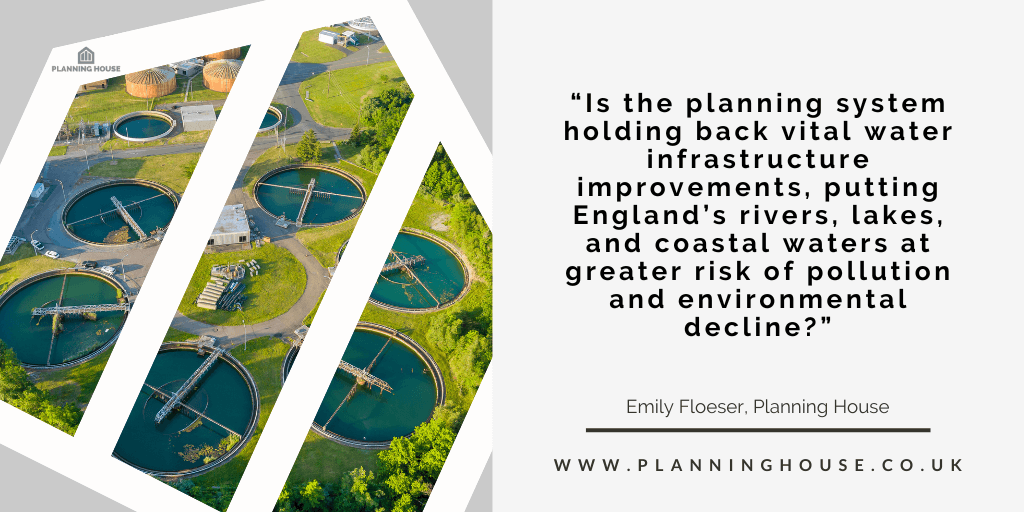
England’s waterways are facing growing environmental pressure. Pollution from sewage overflows, agricultural runoff, and insufficient infrastructure has led to widespread concern about the health of rivers, lakes, and coastal waters. While much of the public debate rightly focuses on water companies and regulation, there’s another factor that often goes unnoticed: the role of the planning system in delaying vital water infrastructure improvements – upgrades that are essential for protecting water quality and meeting future demand.
Let’s explore how the planning system affects this issue and why it matters.
The Planning System and Water Infrastructure: The Basics
Water companies in England are responsible for providing clean drinking water, managing wastewater, and protecting water quality. To do this, they need to build and upgrade infrastructure such as:
- Water treatment plants
- Reservoirs and storage facilities
- Sewer networks and pumping stations
- Stormwater tanks and overflow systems
However, just like housing or commercial development, these projects often require planning permission – and the process can be lengthy, complex, and unpredictable.
Where the Delays Happen
1. Land Use Conflicts
Water infrastructure projects are often large, technical, and located in sensitive areas – such as near rivers, floodplains, or rural land. This can lead to conflicts with Local Plans, Green Belt policies, or landscape protections, making it harder to secure approval.
2. Environmental Assessments
While environmental protection is essential, the requirement for detailed Environmental Impact Assessments (EIAs) and Habitats Regulations Assessments (HRAs) can add months – or even years – to the planning timeline. These are rigorous and necessary, but they can also be a barrier to timely upgrades.
3. Slow Plan Updates
Local Plans are not updated frequently enough to reflect emerging infrastructure needs. Even when the need for new water infrastructure is known, it may not be safeguarded in policy, meaning it can be harder to justify or prioritise during decision-making.
4. Public and Political Resistance
Major infrastructure schemes can attract public opposition, particularly when they affect local landscapes or involve temporary disruption. Planning committees may be reluctant to approve unpopular schemes, even if they are essential to regional water management.
5. Fragmented Decision-Making
The planning system often operates in silos, with local authorities, water companies, the Environment Agency, Natural England, and Ofwat all playing separate roles. This can lead to coordination issues, conflicting priorities, and delays in approvals.
The Consequences for Water Quality
When critical infrastructure is delayed, water companies face real challenges in managing rising demand and extreme weather events. The result?
- Sewage overflows into rivers during heavy rain.
- Limited capacity to treat wastewater to modern environmental standards.
- Reduced resilience to drought and flooding.
- Longer-term environmental degradation, including harm to aquatic life and public health risks.
In short, pollution persists, not because the technology doesn’t exist but because the systems to deliver it are too slow.
A System Under Pressure
The urgency of the climate crisis, population growth, and stricter environmental targets means the demand for water infrastructure is only increasing. Yet the planning system hasn’t adapted fast enough. For example, new housing developments are often approved without a full understanding of whether the existing wastewater network can cope. Meanwhile, proposed upgrades to treatment works may be stuck in planning, waiting for permissions that should align with national environmental goals.
Is Reform on the Horizon?
The government has acknowledged the need to better align infrastructure planning with environmental and housing policy. Recent proposals have suggested:
- Giving greater weight to strategic infrastructure in Local Plans,
- Accelerating decisions for critical water and energy projects,
- Improving collaboration between planning authorities and utility providers,
- Streamlining environmental assessments without weakening protections.
However, meaningful change is still evolving and, in the meantime, the backlog of essential upgrades continues to grow.
In Summary
The planning system plays a vital role in shaping sustainable development. But when it comes to water infrastructure, it can unintentionally slow down the very improvements needed to protect England’s rivers and waterways.
The result is a mismatch between environmental ambition and delivery on the ground. Until the planning system becomes more agile, joined-up, and responsive to infrastructure needs, pollution risks will remain, and the goal of clean, healthy waterways will stay frustratingly out of reach.
Understanding this hidden connection is key to driving both public awareness and policy reform. After all, if we want cleaner rivers, we need a planning system that helps deliver them not one that gets in the way.