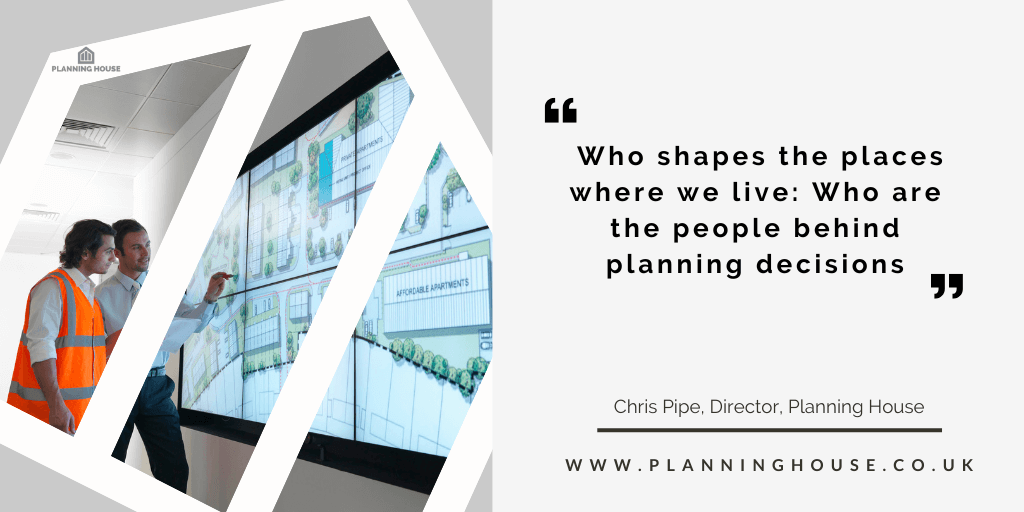
Town planning in the England isn’t just about local councils approving housing estates or new supermarkets. The planning profession spans across the public, private, and third sectors, with each type of planner playing a vital role in shaping our towns, cities, and rural areas.
In this guide, we’ll explore the main types of town planners in England what they do, and why they matter.
1. Local Planning Authority (LPA) Planners
Local councils employ planners to manage growth in their area. These are known as Local Planning Authority (LPA) planners. They decide whether planning applications should be approved, write Local Plans that set out how an area should develop in the future, and take action when developers break the rules. In short, they act as referees of the planning system, balancing the needs of communities with national policy.
They are the most recognisable type of planner in LPAs are :
- Development management: deciding planning applications for homes, shops, and businesses.
- Policy planning: preparing Local Plans that set out how an area will develop over the next 5–20 years.
-
Planning enforcement: ensuring developments comply with regulations.
Why they matter: LPA planners balance national policy, local needs, and community feedback to guide sustainable growth.
2. Consultant Planners (Private Sector)
Consultants usually work for private firms and are hired by developers, landowners, or sometimes even councils. Their role is to guide clients through the often complex planning process. They prepare and submit planning applications, give advice on what can be built on a site, and may even represent clients at appeals if a project is refused. Unlike LPA (council) planners, their job is to help clients achieve the best possible outcome within the rules.
Planning consultants typically work for specialist consultancies, multi-disciplinary firms or independently.
Why they matter: Consultants help clients navigate the planning system and maximise the chances of securing planning permission. Planning House is an Independent Planning Consultancy.
3. Third Sector Planners
Not all planners work for councils or private companies. Many are based in the third sector; charities, housing associations, and community organisations. Their focus is on making planning more inclusive and fair. They support neighbourhood planning groups, promote affordable housing, and campaign for greener, more sustainable places. By giving local communities a stronger voice, third sector planners ensure that planning isn’t just about profit, but also about social and environmental value.
Why they matter: They give communities a stronger voice in planning and champion causes beyond profit, such as social and environmental impact.
4. Developers and In-House Planning Teams
Some of housebuilders and development companies have their own in-house planning teams. These planners focus on projects owned by the company itself. They handle applications, manage relationships with councils, and make sure schemes comply with planning policy while still delivering business goals. Their role is crucial in turning ideas on paper into actual developments on the ground. They also can look strategically in terms of finding sites to develop.
Why they matter: They drive forward housing delivery, regeneration, and commercial development from within the development industry. However they also often instruct private planning consultants on specific schemes.
5. Specialist Planners
Town planning is a broad field, and many professionals specialise in one area. Such as transport planners who focus on how people and goods move around, ensuring new developments are well connected and safe. Environmental planners tackle issues like climate change, biodiversity, and flood risk. Heritage planners look after historic buildings and landscapes. Infrastructure planners work on large-scale projects such as renewable energy, airports, and rail networks. These specialists provide the technical knowledge needed to make complex developments possible.
Why they matter: They bring deep technical knowledge that shapes complex developments and long-term strategies.
6. Central Government and Agencies
At the national level, planners work for organisations such as the Planning Inspectorate, which deals with appeals and examines Local Plans, or advisory bodies like Historic England and Natural England. Others are based in central government departments, helping to set planning policy across the country. These roles may feel distant from local decisions, but they shape the rules and frameworks that everyone else works within.
Why they matter: They influence national planning policy and ensure consistency across the country.
Final Thoughts
Whether it’s a council officer deciding on a householder extension, a consultant working on a housing development, or a charity planner supporting a community group, town planners all play a part in shaping the places where we live and work. Understanding the different types of planners in the UK helps make sense of how decisions are made and who is influencing the future of our towns and cities.